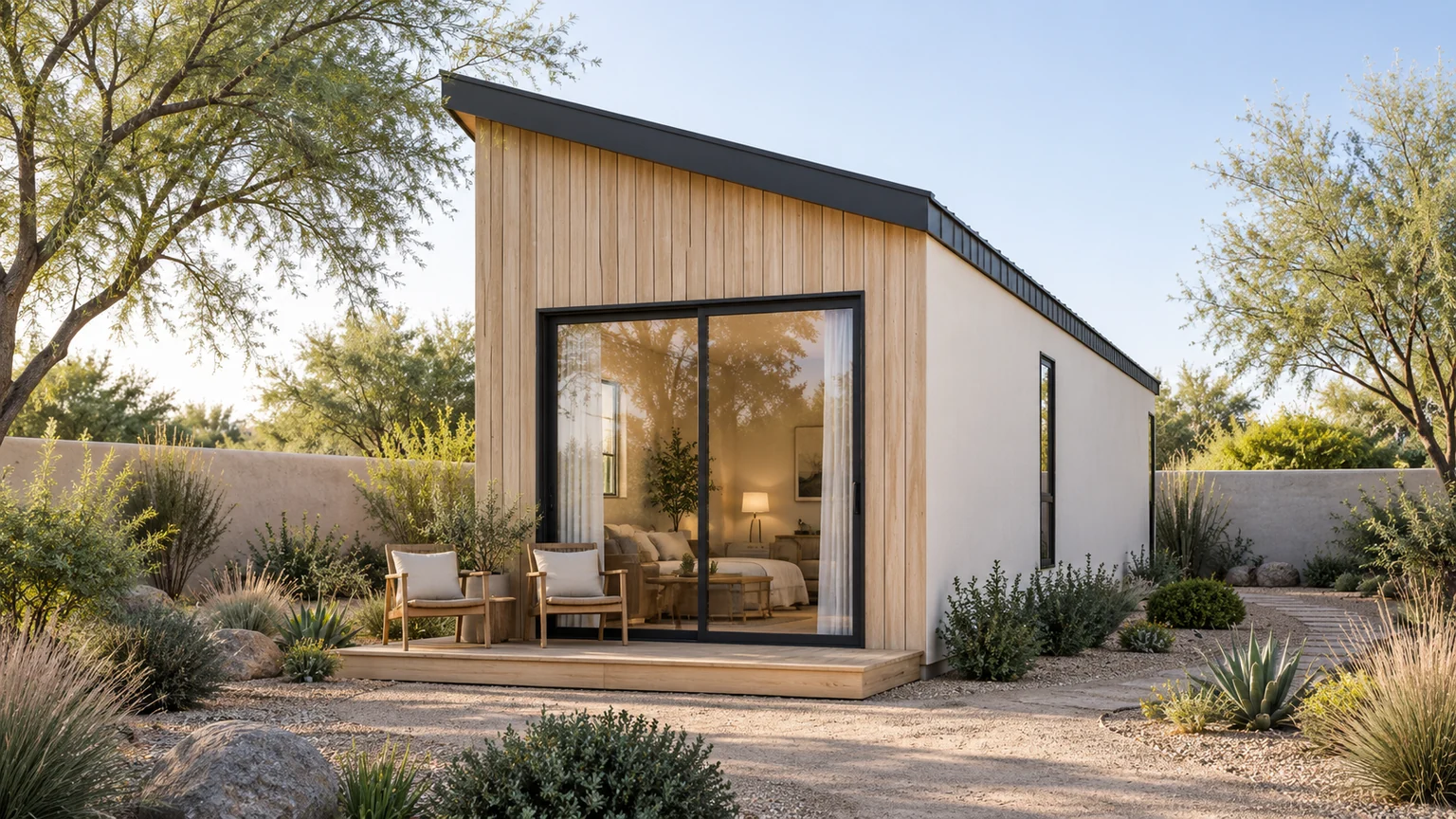
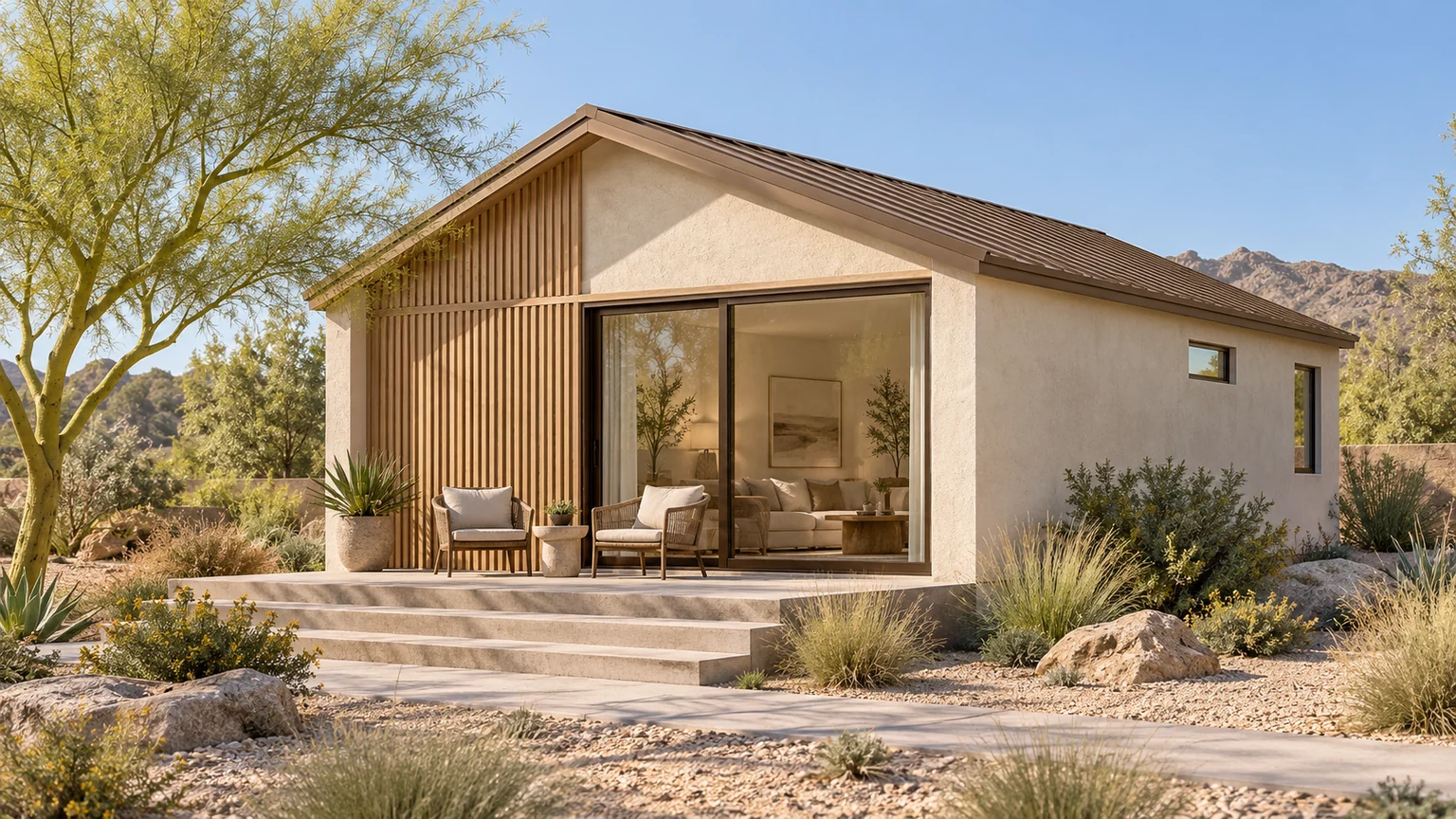
An ADU for a parent begins with a family conversation. The new home may make everyday connection easier, while the person living there still needs a place that reflects their routines and preferences. Include them in the design brief from the beginning.
Talk about a normal week rather than only the moments when help might be useful. Where do they like to read? Do they cook every day? How often do friends visit? Which belongings make a place feel like home? These answers give the plan a useful purpose.
Agree on how the two households will connect
Discuss meals, visitors, outdoor space, and the path between the homes. Decide which activities are likely to be shared and where each household wants independence. A welcoming connection works best when it is supported by clear expectations.
Place the ADU entrance and primary windows with those expectations in mind. An entrance facing a shared courtyard creates a different experience from one reached by a separate path. Compare both arrangements on the actual property, including the existing home’s private rooms and outdoor seating.
Walk through an ordinary day
Start with arrival. Consider the route from the vehicle to the door, carrying groceries, unlocking the entrance, and setting things down. Continue through preparing breakfast, using the bathroom, doing laundry, and sitting outside. Identify anything the person would find inconvenient in that sequence.
Draw furniture and equipment at realistic sizes. Include the chair they enjoy, the bed they expect to use, and storage for everyday items. The plan should explain where belongings will go and how rooms will be used. A large label reading “living area” does not answer those questions.
Discuss ease of movement individually
Ask about current mobility needs and possible changes the family wants the design to anticipate. Have the design team review the entry, circulation, bathroom, hardware, and relevant requirements with those needs in mind. Where specialist advice would be helpful, include the appropriate professional in the discussion.
Avoid treating a single feature as a complete accessibility solution. A convenient shower is part of a larger route through the home. A smooth interior layout also needs a suitable approach outside. Review the full experience and the actual dimensions, rather than relying on an accessibility label attached to a concept image.
Give independence practical support
Talk about laundry, temperature controls, meal preparation, deliveries, and storage. Decide what the occupant should be able to handle within the new home and what the family agrees to share. Make these choices explicit so the layout reflects a real arrangement.
Consider a place for a friend to sit without entering the sleeping area. If a desk or hobby space matters, include it at the same stage as the kitchen and bathroom. These everyday pleasures help the home feel personal and useful over a long stay.
Plan the outdoor relationship
An outdoor sitting area can provide a place of one’s own close to the family. Show the chair or small table, the view from it, and the route back inside. Discuss when the space will be used and where shade and appropriate lighting would be useful.
Preserve the main household’s outdoor routines too. If everyone already uses a particular path to a pool or patio, show it on the site plan. The new ADU should be positioned with an understanding of the full property, including neighboring doors and windows.
Make the next decision together
Prepare a short brief with three priorities from the future occupant and three from the property owner. Note where they overlap and where there is a tradeoff. Compare a small number of furnished layouts against that brief so the conversation stays manageable.
Then pair the preferred direction with a property review and a clearly written scope. Confirm the applicable local process for the proposed use, obtain any private association requirements, and identify service and site questions. A considered first phase helps the family make an informed commitment to a home that supports both closeness and independence.